 Image 1 of 1
Philodendron erubescens ‘Pink Princess’
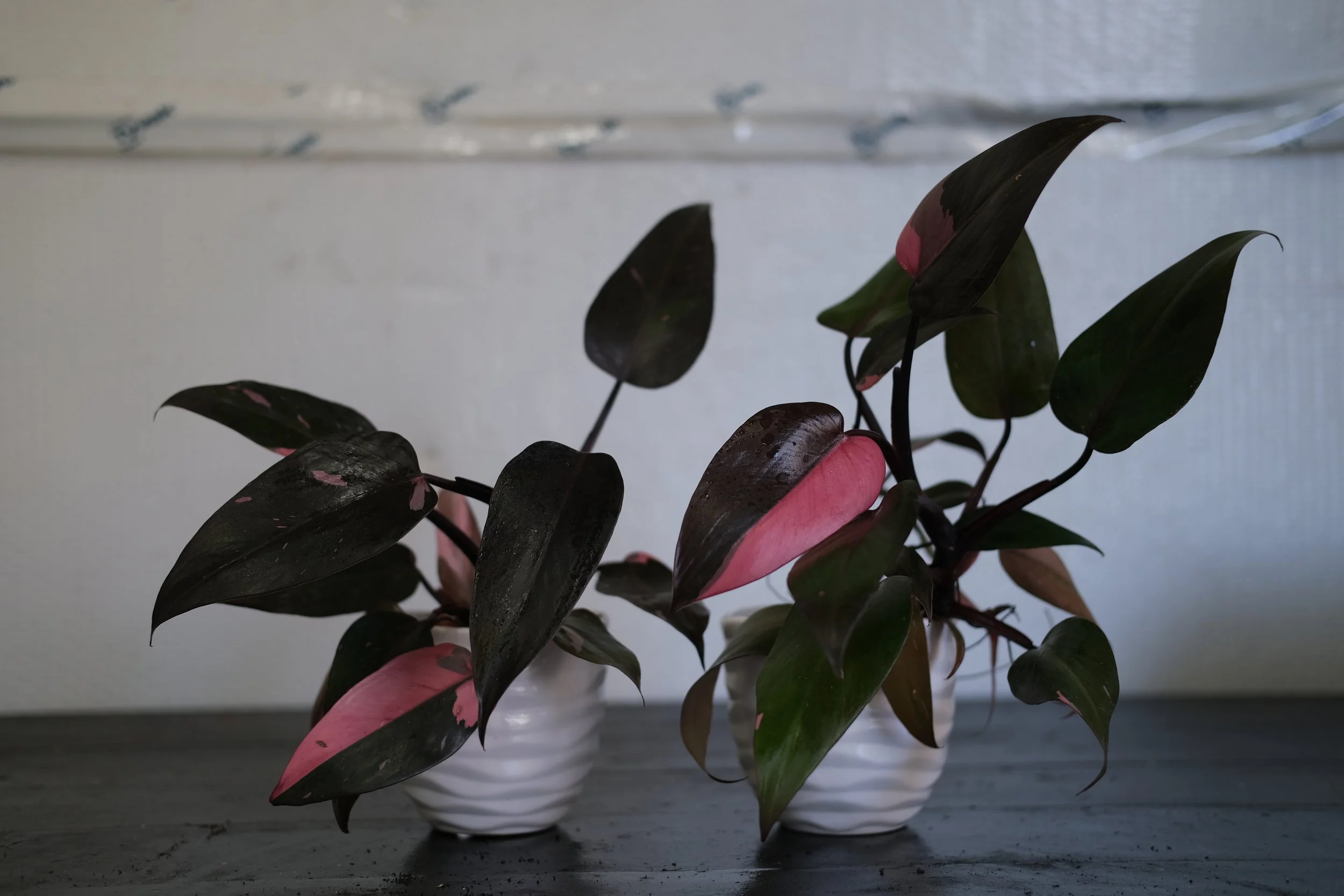
The Pink Princess Philodendron is a true collector’s favorite, admired for its stunning pink variegation splashed across deep green to nearly black leaves. No two plants are alike, making each Pink Princess a one-of-a-kind addition to any indoor plant collection. As it matures, this climbing philodendron develops larger leaves and even more dramatic variegation, creating a striking tropical display.
Light:
Bright, indirect light is essential to maintain vibrant pink variegation. Avoid harsh direct sun, which can scorch the leaves.
Water:
Allow the top 1-2 inches of soil to dry between waterings. Water thoroughly and ensure excess moisture drains away.
Humidity:
Prefers moderate to high humidity but adapts well to most indoor environments.
Temperature:
Thrives between 65-85F. Protect from cold temperatures and drafts.
Pet Friendly:
No. Toxic if ingested by pets or humans.
Pro Tip:
Pink variegation requires light to thrive. If your plant begins producing mostly green leaves, increasing bright indirect light may help encourage more variegation in future growth.
Philodendron erubescens ‘Pink Princess’
The Pink Princess Philodendron is a true collector’s favorite, admired for its stunning pink variegation splashed across deep green to nearly black leaves. No two plants are alike, making each Pink Princess a one-of-a-kind addition to any indoor plant collection. As it matures, this climbing philodendron develops larger leaves and even more dramatic variegation, creating a striking tropical display.
Light:
Bright, indirect light is essential to maintain vibrant pink variegation. Avoid harsh direct sun, which can scorch the leaves.
Water:
Allow the top 1-2 inches of soil to dry between waterings. Water thoroughly and ensure excess moisture drains away.
Humidity:
Prefers moderate to high humidity but adapts well to most indoor environments.
Temperature:
Thrives between 65-85F. Protect from cold temperatures and drafts.
Pet Friendly:
No. Toxic if ingested by pets or humans.
Pro Tip:
Pink variegation requires light to thrive. If your plant begins producing mostly green leaves, increasing bright indirect light may help encourage more variegation in future growth.